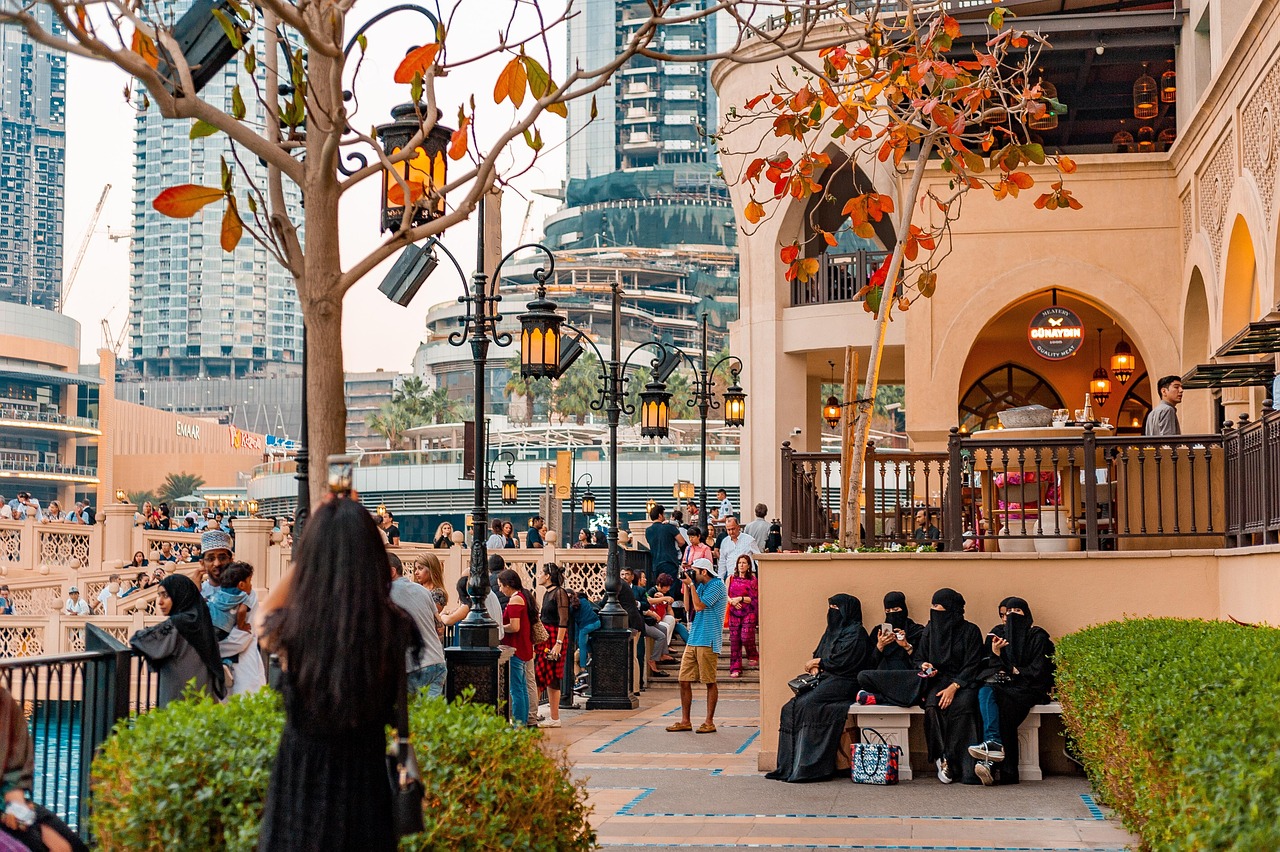
The shimmering skyline of the United Arab Emirates has long served as a testament to rapid globalization and architectural ambition. Last year Dubai welcomed 19.59 million international visitors, making it one of the most-visited cities globally, a statistic that solidified its status as an invulnerable bastion of luxury and commerce. However, the geopolitical landscape has shifted with terrifying velocity. The current escalation involving the US-Israel war with Iran has had a devastating impact on visitor numbers, and local businesses are struggling to navigate a climate of unprecedented volatility.
A Ghostly Silence in the Culinary Capital
On most evenings, Dubai’s restaurants would usually be packed, with the constant buzz of diners, of tourists and residents filling tables across the city. The clatter of cutlery and the polyglot hum of international travelers defined the evening atmosphere of areas like Downtown and the Dubai Marina. But over the past month, many of those tables have sat empty. This sudden desolation is not merely a seasonal lull; it is a profound economic contraction birthed by regional instability.
For Natasha Sideris, the shift has been sudden and stark. She opened her first restaurant in Dubai in 2014, riding the wave of the city’s meteoric rise. Over the past decade, her Tashas hospitality group has grown to 14 outlets across the country, employing more than 1,000 people. But the US-Israel war with Iran is now taking a heavy toll on her business, threatening the foundations of a decade’s worth of expansion.
Sideris notes that the fiscal hemorrhaging is widespread. Many of her restaurants, which are popular with both residents and expats, have seen revenues fall by more than 50%. However, the data becomes even more harrowing when analyzing the tourism-centric sectors. Outlets that depend heavily on tourists have been hit much harder, with declines of 70% to 80%. This catastrophic evaporation of demand has necessitated painful corporate triage. The crisis has forced her to cut salaries by 30% for all staff including herself.
“Dubai’s tourism industry reels from ‘brutal’ impact of war,” Sideris remarks, her voice reflecting the gravity of the situation. “I had a choice – either fire 30% of my staff or cut salaries to save jobs. I chose the latter for now.”
Targeted Infrastructure and Aerial Disruption
The malaise is not restricted to the dining sector; the entire tourism ecosystem—from hotels and travel agencies to transport companies and airlines—is feeling the strain. Over the past two decades, Dubai has built itself into one of the world’s leading tourism hubs, a feat that required billions in investment and a reputation for absolute safety. But since the war began, that momentum has been sharply disrupted.
The wider UAE has come under repeated attacks, with Dubai among the key targets of Iran’s military response following US and Israeli strikes. Authorities say more than 2,400 missiles and drones have been launched towards the UAE, targeting airports, ports, and civilian areas. While the sophisticated defense arrays intercepted more than 90% of these projectiles, the psychological and physical fallout remains significant.
Debris has fallen across major residential areas and luxury enclaves. Images of fragments striking the Fairmont hotel on the upscale Palm Island have permeated social media, acting as a powerful deterrent to potential vacationers. To date, 11 people have been killed and more than 185 injured across the UAE. Such figures, while numerically small in the context of global warfare, are seismic for a city whose brand is predicated on sanctuary and opulence.
The Stagnation of the Global Hub
The conflict, which began on 28 February, has effectively paralyzed air travel across the region. Dubai International Airport—the world’s busiest for international passengers—handled 95.2 million travellers last year. Now, it stands as a symbol of the sector’s fragility. Thousands of regular, scheduled flights have been cancelled, and while flag-carrier Emirates is attempting to restore its network, the influx of new arrivals has effectively collapsed.
Hotel occupancy levels have plummeted to between 15% and 20% of their seasonal norms. Even the most prestigious properties on Palm Jumeirah have slashed prices by half to lure the remaining resident population, yet the “uncertainty is disrupting everyone,” as industry analysts observe. For the migrant workforce—the indispensable backbone of the industry—the situation is increasingly dire. Many workers, already financially vulnerable due to recruitment debts, now face unpaid leave or summary dismissal.
A Path to Resilience Amidst Uncertainty
The economic repercussions extend far beyond the city limits. Research suggests that between 23 million and 38 million fewer people could travel to the Middle East this year, representing a potential loss of up to $56bn in visitor spending. This is a staggering blow to a region that had only recently celebrated a triumphant post-pandemic recovery.
In response, the Dubai government has announced a $272.26 million support package for businesses. This intervention allows hotels to delay sales-related fees and tourism dirham charges, providing a temporary fiscal cushion. However, these measures are palliative rather than curative. While authorities are drafting ambitious promotional campaigns to revive the “Dubai brand” once the smoke clears, the duration of the conflict remains the ultimate variable.
As the industry waits, the silence in the once-teeming lobbies and dining rooms serves as a somber reminder of how quickly the fortunes of a global hub can change. The city is preparing for a rebirth, but for now, it remains in the grip of a brutal geopolitical winter.