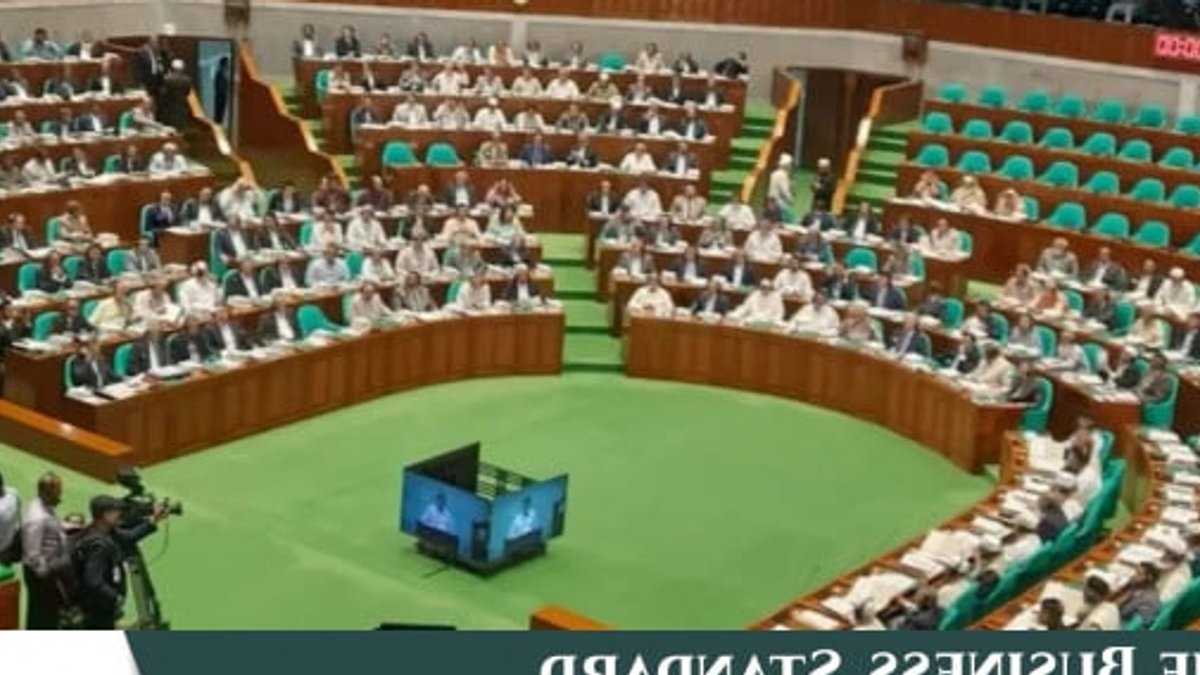
Parliament approved three measures on 6 September, notably the National Human Rights Commission Bill, 2026 and the Enforced Disappearance Prevention and Redress Bill, 2026, despite a walkout by opposition members.
Opposition Walkout Over Legal Concerns
Law, Justice and Parliamentary Affairs Minister Md Asaduzzaman introduced the human‑rights proposal, while Home Minister Salahuddin Ahmed moved the disappearance legislation. The third measure, amending property transfer rules, passed with opposition present, but the two human‑rights items were voted on after the opposition left.
Opposition leader Dr Shafiqur Rahman announced the walkout, saying the treasury bench had promised stronger, improved versions of the laws that would let interim ordinances lapse. “We have already expressed our concerns,” he said, adding that the proposed law applies differently depending on who is accused.
He argued that the commission would investigate violations by ordinary citizens directly, but would first notify a law‑enforcement agency if one of its members were involved. “If an ordinary person commits a human rights violation, the Human Rights Commission will be able to investigate it directly. But if a member of a law enforcement agency is involved, the agency will first be notified and asked to respond,” he explained.
Rahman claimed the government let earlier measures lapse and now presented weaker versions. “For this reason, we will not be partners in passing these laws,” he declared before exiting the chamber. The Speaker acknowledged the protest with a brief “Thank you for walking out.”
Structure of the New Human Rights Body
The legislation repeals the 2009 act and creates a new framework aimed at an independent commission. It will consist of a chairperson and four commissioners, with at least one woman and one member from a small ethnic group or disadvantaged community.
A ten‑member selection committee, chaired by the Speaker, will recommend candidates. The panel includes the law minister, home minister, a ruling‑party MP, an opposition MP, a university professor, a rights expert nominated by the President, a journalist specializing in human rights, and a representative from a small ethnic group.
The proposal clarifies jurisdiction, streamlines complaints, and lets the commission issue interim orders to protect victims from immediate threats while investigations continue. It also establishes a “Procedure to be followed in case of disciplined forces,” allowing the commission to request reports from the relevant organization and, if unsatisfied, to make recommendations that must be answered in writing within 45 days.
Enforced Disappearance Measure Details
The disappearance measure defines the act as a cognisable, non‑bailable, non‑compoundable offence. Penalties range from a minimum three‑year term to death or life imprisonment, with fines up to Tk 1 crore if a victim remains untraced for more than five years.
Courts may issue search warrants, conduct trials in absentia, admit digital evidence, and protect witnesses, complainants, whistleblowers, and victims. Families receive the right to updates, truth‑seeking, and information on the whereabouts or fate of the missing person.
A dedicated fund will cover legal aid, medical treatment, rehabilitation, and compensation. If the convicted’s assets can’t cover damages, the state will pay, while spouses and dependents may use the disappeared person’s property for essential expenses. After five years, a disappearance certificate will allow distribution of the property among heirs.
Both investigation and trial phases must conclude within 120 days. If an allegation involves a disciplined force, that force cannot investigate itself; the government will assign another force or an inter‑force team, excluding the accused unit.
In practice, these provisions could mean quicker resolution for families who have waited years for answers, and a clearer path for prosecutors to pursue cases that previously stalled due to jurisdictional ambiguity.
Amendment to Property Transfer Act
The Transfer of Property (Amendment) Bill, 2026 adds legal recognition for lifetime usufruct rights. Donors such as parents or grandparents may transfer ownership to relatives while retaining the right to use the property for life.
The law minister’s statement noted that the existing 1882 act lacked a mechanism for donors to keep enjoyment rights after gifting the title. This change aims to give elderly donors more flexibility without losing their residence.