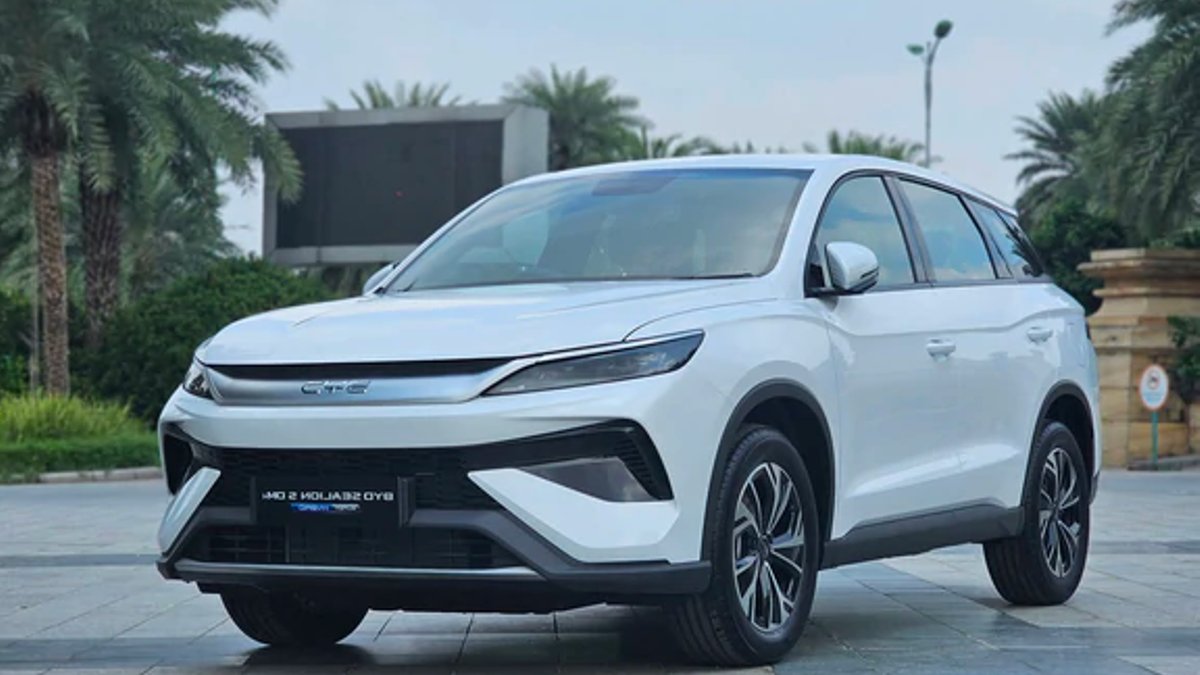
Vietnam’s market for hybrid vehicles is heating up as manufacturers roll out fresh models and dealers launch early-booking promotions ahead of the year-end shopping period.
New models and pricing drive competition
BYD Vietnam plans to launch the Sealion 5 DM-i, a plug-in version, in October.
Other brands are adding to the lineup. The lineup now includes the Lexus ES 350h, Subaru Forester, Hyundai Tucson and Hyundai Palisade, each positioned as fuel-efficient alternatives.
Dealers are courting buyers with limited-time discounts. Certain locations advertise cuts of up to VND100 million (US$3,850) for customers who place a VND20 million (US$770) deposit, though the number of slots is capped.
The current price band of VND600 million–VND800 million (US$23,100–30,800) now covers a broad array of choices. The Suzuki XL7 starts at VND599.9 million, the BYD Seal 5 at VND696 million, and the Toyota Yaris Cross HEV lists at VND765 million but can be found for VND728 million under promotion.
Market growth and tax benefits
Hybrid sales are rising sharply. This surge follows a change in tax policy on January 1, 2026.
This reduction has lowered prices by tens to hundreds of millions of dong.
Read Also: The Capital Grille launches in Ho Chi Minh
Dealership offers and buyer calculations
Higher upfront costs remain a hurdle. Hybrid versions are typically priced tens of millions of dong to more than VND100 million (US$3,850) higher than their gasoline counterparts.
For example, the Honda CR-V e:HEV L is priced at VND1.17 billion, roughly VND71 million above the standard L version. Similarly, the Civic e:HEV RS carries a premium of around VND110 million over the gasoline RS.
Drivers who handle congested city streets may recover the extra expense more quickly, thanks to electric-motor assistance during acceleration and energy recovery during braking. In contrast, owners who travel mainly on highways must weigh fuel savings against the larger initial outlay.
Battery longevity and after-sales service are also top of mind. Japanese firms benefit from extensive dealer networks and readily available parts, while Toyota said new hybrid vehicles sold from 2026 can receive warranties of up to 10 years if they meet the company’s conditions. BYD offers an eight-year or 160,000-kilometer warranty for its batteries.
Sales data underline the shift. Members of the Vietnam Automobile Manufacturers Association reported 13,889 hybrid units sold in the first eight months of 2026, a 65 percent rise from the previous year. The surge follows a tax revision effective 1 January 2026, which lowered the special consumption tax for eligible models to 70 percent of the rate applied to comparable internal-combustion vehicles, trimming prices by tens to hundreds of millions of dong.