In April, four astronauts became the first humans to travel around the Moon since 1972. The Artemis II mission—no landing, just a loop past the far side and a Pacific splashdown—drew hundreds of millions of viewers, a level of public interest not seen since the Space Shuttle first launched in 1981.
The shuttle program ran for 30 years but fell short of its original goal of providing cheap, safe access to space. Two orbiters were lost in disasters. The Soviet Union’s Buran, its own shuttle, flew only once in 1988.
Mars as an escape plan
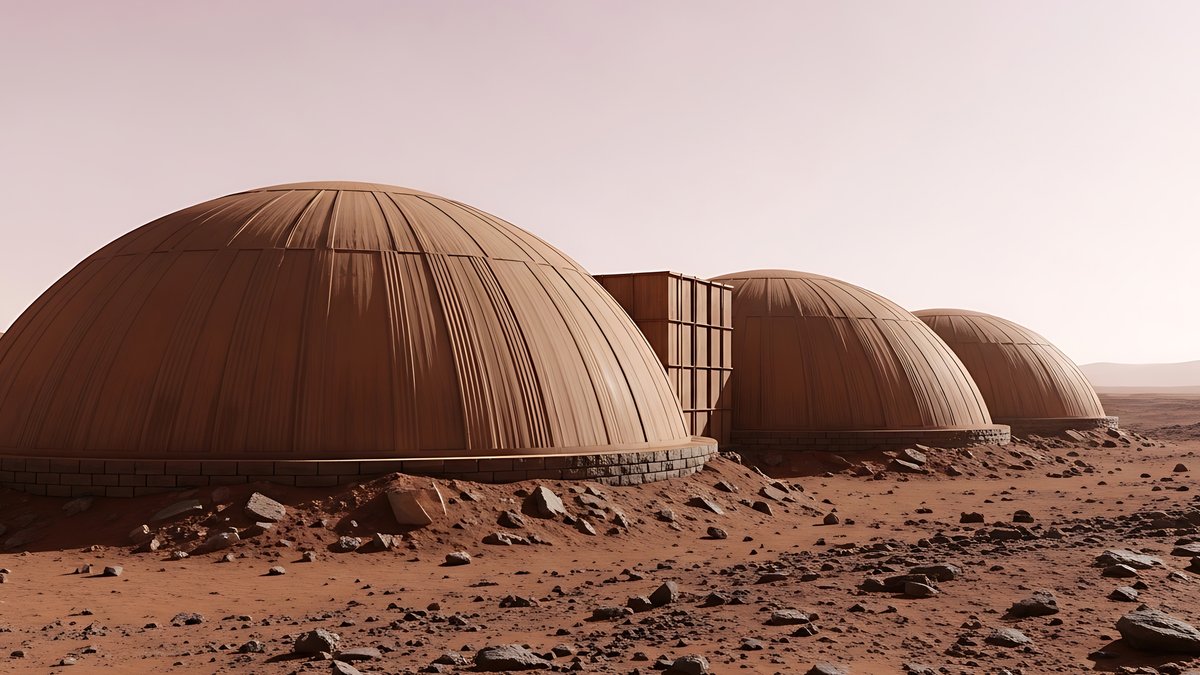
While Artemis II was a NASA mission, private companies have driven much of the recent push into space. Elon Musk, founder of SpaceX, has long argued that humans must colonize Mars to ensure survival. In 2018, he called it essential in case of global war or ecological collapse. More recently, he dismissed the Moon as a “distraction.”
The idea of Mars as a backup planet is not new. Earth’s vulnerability makes a strong case for spreading beyond a single world. Yet critics challenge the logic.
Lord Martin Rees, Britain’s Astronomer Royal and co-founder of Cambridge’s Centre for the Study of Existential Risk, calls the dream of mass migration to Mars a “dangerous delusion.” The planet’s conditions are harsher than Antarctica, and no amount of Earth’s problems would make it more hospitable. Neil deGrasse Tyson has pointed out that repairing Earth is simpler and far less expensive than terraforming another world.
Related: Underground Farming Expands in Cities
Many skeptics share concerns about equity. Daniel Deudney, a political scientist at Johns Hopkins, argues in Dark Skies that space expansion could introduce new risks rather than solve existing ones. He advocates for using space technology to benefit Earth rather than abandon it. Kelly and Zach Weinersmith intended to write a guide for settling the cosmos but instead produced A City on Mars, a book revealing how little thought has gone into the practicalities of off-world living. They note that readers often finish the book feeling more appreciative of Earth.
Critics often claim space exploration diverts resources from pressing terrestrial issues, but the numbers tell a different story. NASA’s annual budget is about $25 billion—less than half a percent of U.S. federal spending. The idea that funding Mars missions comes at the expense of addressing poverty is largely a misconception.
Still, there are compelling reasons to explore. Robert Zubrin, president of the Mars Society, has spent decades making the case for settlement. A civilization without a frontier, he warns, curls in on itself. One need not swallow the frontier myth whole to feel the pull of it.
These arguments, however, serve different purposes. The current enthusiasm blurs the distinction. Not all space exploration aims to colonize Mars. Sending a probe to Europa or launching a telescope to study the early universe costs relatively little and yields immense scientific value. Observing Earth from orbit has already transformed climate science. Deflecting an asteroid could one day prevent a catastrophe. Such efforts carry no vanity.
Human missions to the Moon or Mars are a separate category. As an adventure, they are justified. As a test of human and technological limits, they hold real value. As a survival strategy, they fall short. Framing them as salvation weakens the case for other space-based benefits. Reaching Mars would be a historic achievement, but it would prove little beyond our own capabilities.
Related: US trade fraud crackdown hits European supply chains
The most valuable outcome of the space age wasn’t a moon rock or a satellite. It was a photograph taken by astronauts far enough away to see the entire planet at once. The distance offered perspective, revealing what we stand to lose.
The real frontier
Space exploration doesn’t require choosing between Earth and the cosmos. The same technology that might one day sustain humans on Mars is already improving life here. Satellites monitor deforestation, track storms, and enable global communications. The International Space Station has hosted experiments leading to medical advances. Even the Moon race spurred progress in computing, materials science, and telecommunications.
Yet the fixation on Mars as an escape plan reveals deeper anxieties. The desire to flee Earth says more about current problems than about space’s potential. If survival is the goal, the most effective approach may be addressing issues here first.
That doesn’t mean exploration should end. The drive to push beyond the horizon is fundamental. But it’s worth considering what we’re truly seeking—and whether the answer lies in looking back as much as forward.
The photograph of Earth from space, the one that changed how we see our planet, wasn’t taken from Mars. It was taken from just far enough away to remind us how small and precious home is.