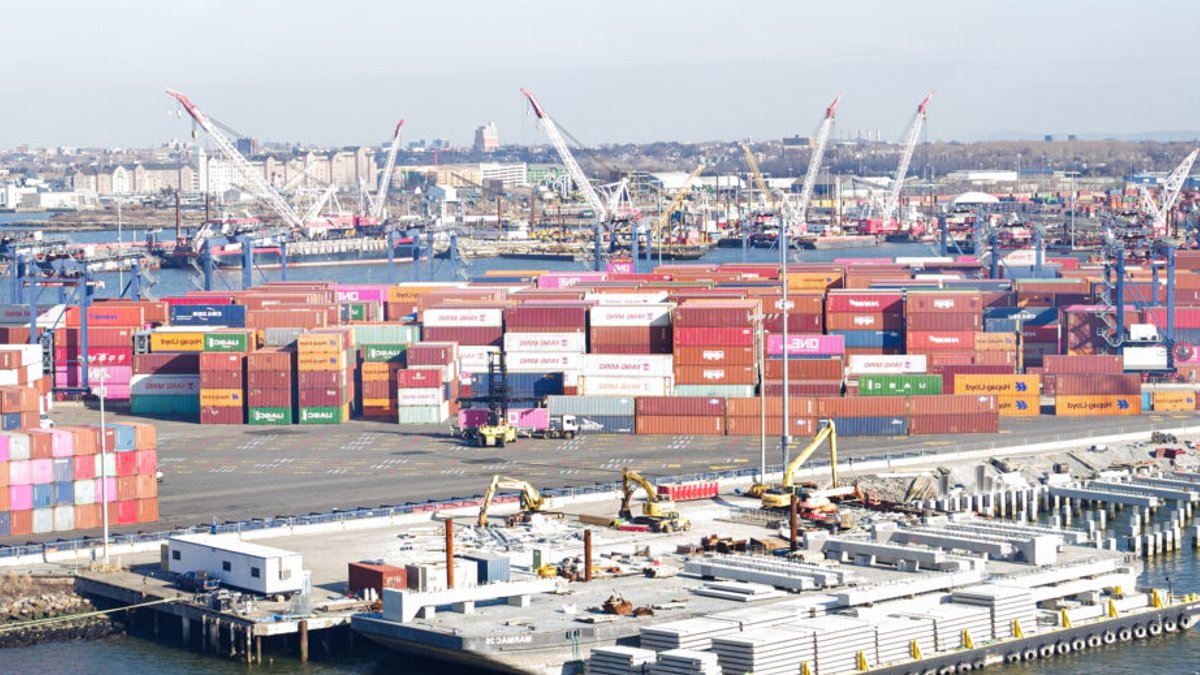
The U.S. Justice and Homeland Security departments released a joint trade fraud enforcement guide on July 14. The document targets a system scrutinizing $14.48 billion in annual exports from Poland to the United States. This action follows a year of record recoveries, including over $1 billion in penalties, forfeitures, and publicly charged losses, though much of that total predates the task force’s 2025 launch.
The largest settlement, $549.5 million with Perfectus Aluminum in May 2026, resolved conduct leading to criminal convictions before the task force existed. Another $54 million came from cutting-tool maker Ceratizit USA in December 2025. Pending criminal charges in California and Illinois accuse individuals of disguising Indian and Emirati jewelry as Singaporean or Omani to avoid $51.6 million in duties. Those defendants remain presumed innocent, and the charged amounts may not be collected.
Law firms estimate about $640 million of the total stems from False Claims Act cases. The Justice Department formalized the effort by creating a Global Trade and Commerce Enforcement Section. While the guide itself is not law, it outlines 16 recurring fraud patterns, from false country-of-origin declarations to shell company schemes, and the statutes prosecutors use to charge them.
For European exporters, the risk is real. The document cites a $22 million False Claims Act settlement with a German multinational over false free trade agreement claims and a $1.9 million drawback fraud resolution with a German toolmaker. “Any imported good that presents a risk to our revenue, our safety, or our values usually begins with a lie,” the guide states. Colin McDonald, assistant attorney general, called trade fraud a serious economic crime in the July 14 announcement.
Related: Underground Farming Expands in Cities
Three legal features now carry significant weight for European businesses. First, the smuggling statute extends liability to anyone who knowingly receives, conceals, buys, or sells illegally imported goods, potentially involving distributors and U.S. subsidiaries. Second, the False Claims Act imposes triple damages for knowingly avoiding customs duties, with “knowing” defined to include deliberate ignorance or reckless disregard. Whistleblowers can file actions in U.S. federal court and receive a share of recoveries. Third, conspiracy and aiding-and-abetting theories can reach foreign participants assisting schemes targeting U.S. imports, subject to jurisdictional limits.
Strong compliance programs meeting EU standards may not suffice for U.S. enforcement. The difference often lies in documentation—whether origin claims, supplier attestations, or internal audits can withstand scrutiny.
The kinds of document fraud and cross-border customs evasion described in the guide are already occurring in Central and Eastern Europe. The methods—falsified documents, shell companies, and cross-border routing—match those in the U.S. guide. The incentive to cheat is increasing on both sides of the Atlantic. Washington’s tariff structure ranges from a 15% ceiling on most EU goods to 50% on steel and aluminum under Section 232. The EU adopted implementing regulations in June 2026, yet friction remains. In May, EU Trade Commissioner Maros Sefcovic pressed Washington for a return to the agreed 15% terms after some EU exports faced stacked duties near 30%.
E-commerce sellers in the region face similar pressure. U.S. Customs and Border Protection made the suspension of the $800 de minimis exemption indefinite in June. Nonpostal low-value shipments from sellers in Vilnius or Sofia to U.S. customers now require formal or informal entry. For international mail, CBP’s new postal informal-entry process takes effect July 24. Undervaluing shipments is one of the fraud patterns the guide highlights.
Related: Visa introduces three-tier Infinite cards across Asia Pacific
Manufacturers assembling Chinese components for U.S.-bound goods should treat “substantial transformation” as a legal test. If the work done in Debrecen or Craiova doesn’t change the article’s name, character, or use, declaring EU origin on a U.S. entry could be false. The applicable origin rule and product-specific facts determine the outcome.
The guide also emphasizes forced labor enforcement. Compliance now runs on two tracks. The U.S. interagency Forced Labor Enforcement Task Force expanded its high-priority sectors from four to 12, adding aluminum, steel, copper, lithium, PVC, seafood, caustic soda, and jujubes to the original list. Several of these—Polish copper and steel, the Hungarian and Serbian battery corridor—are central to the region’s industrial base.
Under the Uyghur Forced Labor Prevention Act, goods with inputs from China’s Xinjiang region are presumed barred unless the importer rebuts the presumption with clear evidence. The EU’s Regulation 2024/3015 will prohibit placing products made with forced labor on the market or exporting them, beginning December 14, 2027. The European Commission will lead investigations involving conduct outside the EU. An integrated supply chain map can help comply with both regimes, though their legal standards differ.
Customs cases hinge on documentation. Entry records, commercial invoices, broker emails, origin certificates, and payment trails may become evidence in discovery or subpoenas once a False Claims Act complaint is unsealed or a grand jury acts. U.S. record-keeping rules require importers to retain entry records for five years. Executive Order 14411, signed June 3, directs the Department of Homeland Security to build enhanced vetting for foreign importers of record, customs brokers, and freight forwarders within 180 days. It also sets a minimum penalty floor of 50% of the assessed penalty, absent exceptional circumstances, and eliminates mitigation for repeat offenders.
Related: Shipping lines impose Gulf surcharges as Hormuz disruption enters fourth month
European counsel should prepare for conflicts between U.S. discovery demands and the EU’s data protection regime. Producing personnel emails and supplier records to the Justice Department can trigger GDPR transfer rules when the records contain personal data. Companies that wait for a subpoena to address lawful transfer mechanisms lose critical time. A documented data map, a litigation hold procedure that works across EU entities, and counsel familiar with both regimes can prevent unforced errors.
Regional exporters must take immediate steps. Map every product flow that touches the U.S., including sales through German or Dutch intermediaries. Test origin claims against the substantial transformation standard with documentation that would survive an audit. Obtain supplier attestations—and, where possible, input-level traceability—for any of the 12 priority sectors. Review who acts as importer of record into the U.S. and whether that entity could pass the vetting regime the executive order contemplates.
Treat internal complaints about customs practices as early warnings. With $640 million of the task force’s tally tied to False Claims Act matters, the employee who raises a concern today could become a relator tomorrow.
Europe built its export growth on being the trustworthy alternative. The next 18 months will test whether the region’s compliance infrastructure can keep pace with its order books when enforcers ask where a product was really made.