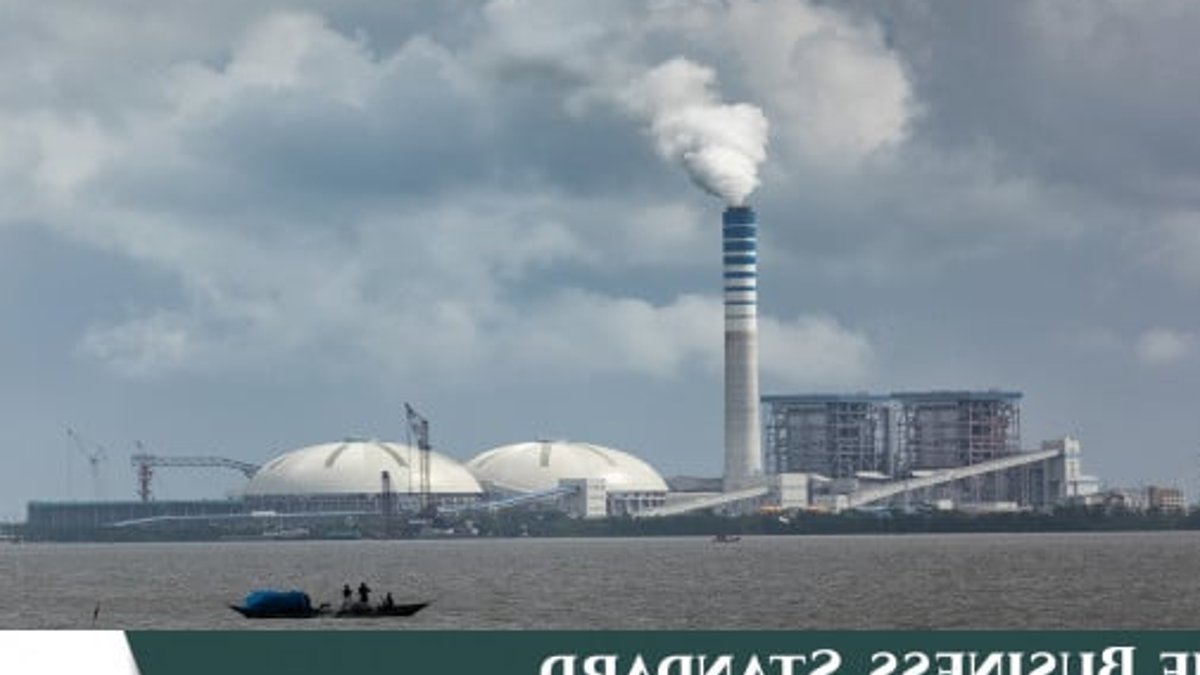
The government of Bangladesh is moving to increase coal-fired power generation to free up natural gas supplies for industries. Prime Minister Tarique Rahman has directed the power, energy and mineral resources ministry to prioritize coal-based generation even if it requires higher subsidies, so that more gas can be diverted to industrial users. The directive comes after the Energy and Mineral Resources Division presented an assessment of the current power and energy supply situation at a meeting yesterday.
Building fuel reserves and importing LNG has become a priority. The government is stockpiling fuel-oil to cover 90 days of demand. If all letters of credit opened for fuel imports through 30 August are delivered on time, the country will have enough stock for 57 days. When the current administration took office, the nation held only 14 days’ worth of fuel-oil reserves. Officials also noted that recent failures to receive six LNG cargoes ordered through the direct procurement method created uncertainty and left room for potential issues, prompting a shift in strategy.
Related: US Debt Surpasses 40 Trillion Mark
Prime Minister’s Economic Affairs Adviser Dr Rashed Al Mahmud Titumir said the gas supply situation for industries would improve by the coming winter, with visible progress in both gas and electricity supplies expected by next summer. To secure gas for manufacturing, the government is also seeking to connect newly discovered gas reserves in Bhola to the national grid through a pipeline. A feasibility study has already been completed, and the project is estimated to cost Tk500 crore. The Energy Division has presented a plan to increase domestic gas supplies by an additional 1,750 mmcfd by 2029, while also recommending the step-up drilling and re-drilling of 150 gas wells across the country.
Domestic gas production is currently declining. Gas production from the country’s fields stands at around 1,600 mmcfd, a drop from the 2,000-2,100 mmcfd supplied by local fields in 2018. One mmcfd of gas can generate around 5MW of electricity. The Energy Division has also recommended installing three more floating LNG terminals (FSRUs) by 2029. The government is not content to rely solely on the Middle East for supplies and is negotiating long-term LNG agreements with countries outside the region. Discussions are also underway with two or three additional US companies over long-term LNG supply deals.
Related: Dollar slips ahead of NFP data
Current supply struggles are severe. The approved gas load nationwide stands at 5,200 mmcfd. If 3,200 mmcfd can be supplied regularly, most sectors would be able to operate more or less normally, though a supply of 3,800 mmcfd would eliminate the gas shortfall. Currently, the country can supply only around 2,600-2,750 mmcfd of gas. Of this, 1,585 mmcfd—around 62% of total supply—is used for electricity generation. Power plants receive 1,000 mmcfd, while 585 mmcfd is supplied for captive power generation by various industries and organizations. The remaining 38% goes to industrial facilities, commercial users, transport and households.
The government seeks to give investors a clear indication of energy availability. Prime Minister Rahman has asked for a detailed plan outlining how the energy supply situation is expected to evolve at different stages through 2029. The administration is also planning to step up solar power generation to further reduce pressure on gas. Officials added that the electricity situation is expected to improve when the first unit of the Rooppur Nuclear Power Plant comes online in September-October, which will reduce some pressure on gas-fired power generation. The Energy Division has instructed the ministry to strengthen the country’s energy supply system to turn Bangladesh into a large-scale manufacturing hub by 2029 and ensure sustainable energy security over the following five years.